
AI for Omnichannel Orders: Seamless Fulfillment Across Online & Offline
- Retail AI Expert

- Aug 18, 2025
- 2 min read
Introduction
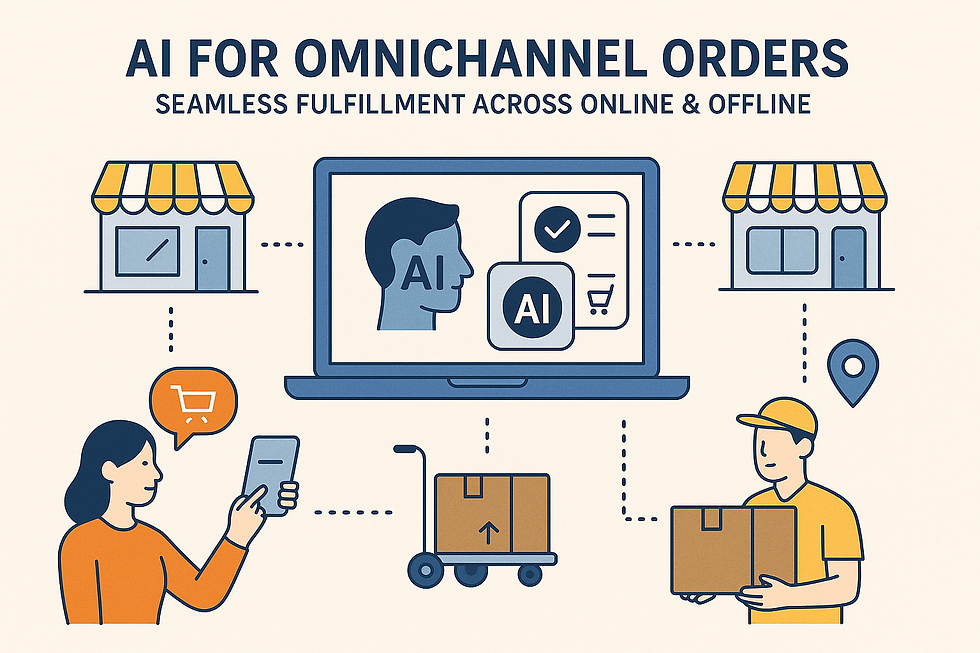
Today’s shoppers don’t see channels—they just see your brand. They expect the same smooth experience whether they’re browsing online, buying in-store, or ordering through a mobile app. For retailers, however, fulfilling across multiple channels is a logistical headache. Inventory often sits in silos, order routing is inefficient, and customers get frustrated with stockouts or delivery delays.
AI is changing that. By unifying data and applying intelligence to order management, retailers can finally deliver true omnichannel fulfillment—where online and offline are no longer separate worlds but part of one seamless system.
The Omnichannel Challenge
Fragmented Inventory: Stock is spread across warehouses, stores, and distribution centers, often with little real-time visibility.
Complex Order Routing: Deciding whether to fulfill from a warehouse, a nearby store, or a partner hub is rarely straightforward.
Customer Expectations: Fast, flexible delivery and hassle-free returns are now the baseline.
Cost Pressures: Misrouted or delayed orders drive up logistics expenses and hurt margins.
How AI Enables Seamless Fulfillment
1. Real-Time Inventory Synchronization
AI integrates data from POS systems, warehouses, and online platforms, giving a single view of stock across all locations. This prevents overselling and lets customers see accurate availability at checkout.
2. Smart Order Routing
Instead of rules-based allocation, AI evaluates location, demand, shipping costs, and capacity to route each order to the best fulfillment point—whether it’s a store down the street or a central hub.
3. Predictive Demand Planning
Machine learning models forecast demand across regions and seasons, ensuring inventory is positioned where customers are most likely to buy. This reduces last-minute stock transfers and shipping delays.
4. Unified Returns Management
AI-powered systems can predict return rates, optimize reverse logistics, and even suggest alternative fulfillment (like store credit or exchanges) to retain revenue.
5. Personalized Delivery Options
Based on customer history and preferences, AI can recommend the most convenient option—home delivery, in-store pickup, or curbside collection—boosting satisfaction while optimizing fulfillment costs.
Benefits for Retailers and Customers
For Retailers: Lower logistics costs, reduced returns, and improved stock utilization.
For Customers: More accurate delivery times, faster shipping, and consistent brand experience.
For Stores: Smarter use of physical locations as mini-fulfillment hubs.
Real-World Examples
A fashion retailer can route an online order to the nearest store with available stock, ensuring next-day delivery.
A grocery chain can dynamically adjust promotions based on perishable stock levels across stores.
Platforms like Nurix and similar AI solutions already help retailers manage orders across multiple channels—bringing intelligence to what was once a fragmented process.
The Future of Omnichannel with AI
The retailers who thrive will be those that embrace AI-driven order orchestration. It’s no longer enough to “do omnichannel”—customers expect it to be seamless. AI makes that possible by eliminating blind spots, optimizing logistics, and ensuring every order is fulfilled in the smartest way possible.
The result? Happier customers, healthier margins, and a retail model built for the future.


Comments